Services
Managed AI services: we run what we build
An AI agent that reads a port's website will break when the port redesigns it. An integration with your accounting system will break when the vendor changes its API. That is not a flaw in the plan; it is the plan. Our managed AI services exist so that when it breaks, it is our job to respond and restore it, with a response target in writing, and your team stays on its own work.
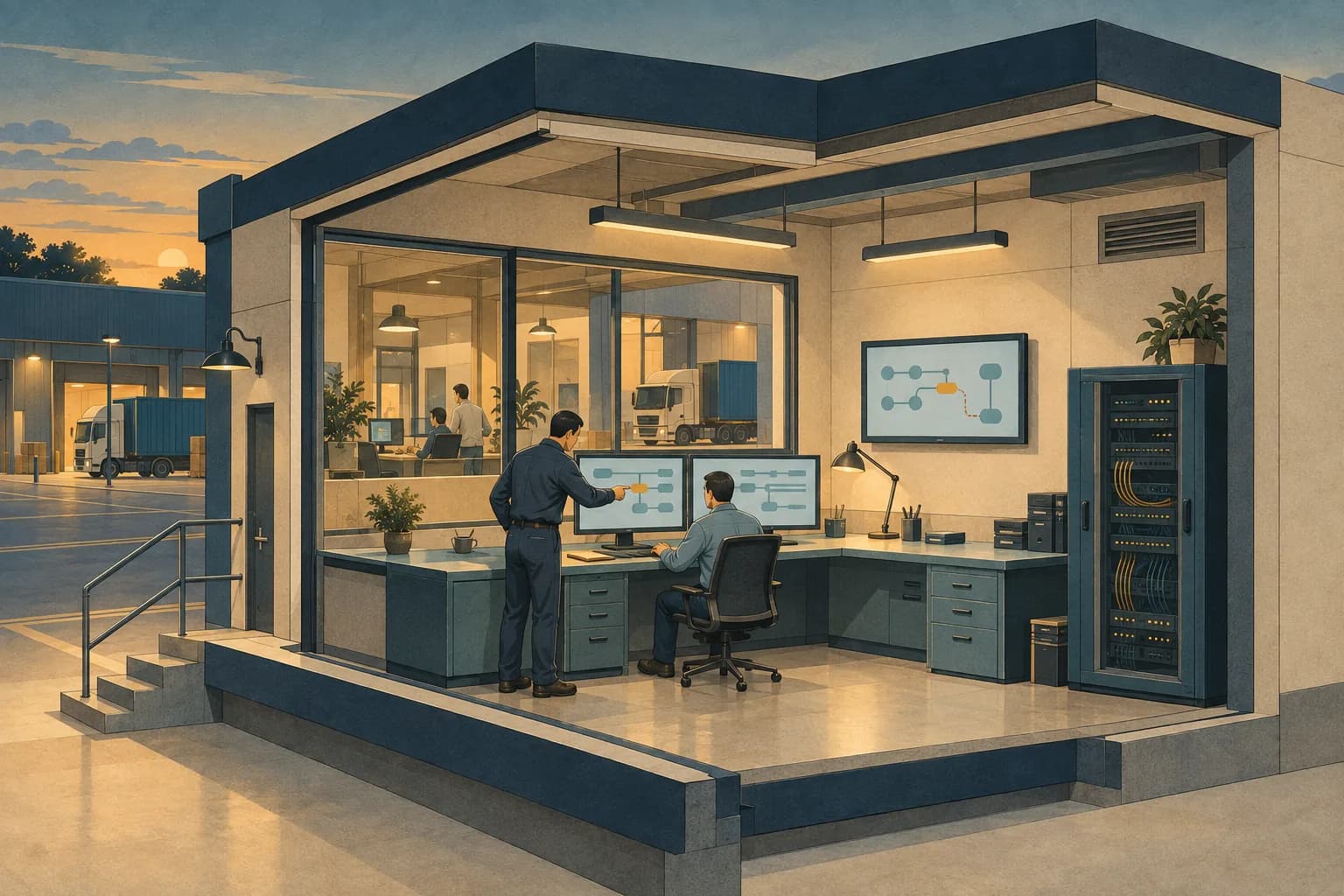
Illustrative example: monitoring workflows and resolving issues while operations continue.
Why agents need an operator
Every system we build depends on things nobody controls: vendor APIs that change several times a year, portals that change without notice, credentials that expire, models whose behavior drifts as providers update them. Most of these changes are announced. Some are not.
Without an operator, the first sign of a break is the dispatcher who did not get the alert, the invoice that did not post, the customer who called. The question that matters is who fixes it at 6 a.m., how fast, and whether that is written down. "We run what we build" is the answer, and it is why this service is the center of how we work, not an add-on.
One incident, start to finish
IllustrativeMonitor, detect, respond, restore. Who does what, and what it costs you.
1. Monitor
The integration checks in on a schedule: did the webhook arrive, did the login still work, is the data fresh. A portal changes its login page overnight.
2. Detect
The next check fails. The monitor raises a P1, because dispatch would start the day without container status. You get a message that says what stopped and when.
3. Respond
A person acknowledges and starts on it within the plan's response target, 4 business hours on Managed, 4 hours including after-hours on Premium. You hear from a person, not a ticket number.
4. Restore
We update the login flow and re-run the missed checks. The work comes from the plan's included hours. If it needs more, we tell you the estimate first, and the extra hours are $200 an hour, pre-approved by you.
What we do not promise. A fix time. Vendors change things in ways nobody can schedule. What we promise is a person on it within the target, an estimate before extra cost, and a plain account of what happened.
What is on your side. A revoked credential, a system upgrade, or an infrastructure move you make without telling us is not covered by included hours. We fix it at the plan rate with your approval.
Illustrative. The portal change is a typical case, not a specific event. Plan terms are in the table below.
Managed AI services: two plans
Twelve-month term, billed monthly in advance. Prices verified September 2026.
| Plan | Managed (recommended) | Premium |
|---|---|---|
| Monthly | $1,200 | $2,200 |
| Annualized | $14,400 | $26,400 |
| Included engineering hours / month | 5 | 10 |
| Sync-health monitoring | Proactive monitoring and alerting | Proactive monitoring and alerting |
| Break/fix when a vendor or portal changes | From included hours | From included hours |
| Infrastructure and dependency patching | ✓ | ✓ |
| Vendor support coordination | ✓ | ✓ |
| Quarterly security updates | ✓ | ✓ |
| P1 (critical) response target | 4 business hours | 4 hours, incl. after-hours on-call |
| P2 (degraded) | Next business day | Same business day |
| P3 (minor / request) | 3 business days | 2 business days |
| Restoration | From included hours, then at the plan rate with your approval | From included hours, then at the plan rate with your approval |
| Work beyond included hours | $200 / hr, pre-approved | $200 / hr, pre-approved |
A response target is the time to a person acknowledging and starting on the issue. Restoration comes from included hours, then at the plan rate with your approval. Unused hours roll over one month. Business hours are 8 a.m. to 5 p.m. Central, Monday to Friday; after-hours coverage is on Premium. Quarterly prepayment earns a 5 percent discount. Third-party fees (cloud hosting, data providers, email services) stay contracted to you.
What every plan covers. Proactive detection of integration failures: webhook drops, authentication and permission changes, stale data. Break/fix when a vendor or portal changes. Vendor support coordination on your behalf. Cloud configuration, security patches, library and runtime updates, email authentication upkeep. Bug fixes in code we delivered. Rule and threshold tuning as your operation changes. User training from the included hours.
What is separate. New features and new workstreams, scoped under their own fixed fee. Issues caused by changes on your side (a system upgrade, a revoked credential, an infrastructure move), supported from included hours and then at the hourly rate.
What monitoring means in practice
Every agent and integration reports its health: last successful run, records processed, errors, and the age of the newest data. We watch those signals continuously and get paged when they cross a threshold, usually before anyone at your company notices.
You get a monthly report: what ran, what broke, what we fixed, hours used, and what we recommend next. Owners can also get a weekly digest in Teams or Slack alongside the operational alerts.
Security controls your insurer asks about
Least-privilege access for every integration. MFA on every account. Secrets in a vault, rotated on a schedule. Encryption in transit and at rest. Logging of every read and write, retained. Quarterly dependency and security updates. These are the questions on a cyber-insurance renewal, and the managed plan is how they stay answered "yes" after go-live, not just on launch day.
If you leave
Everything is already yours: code, data, cloud and vendor accounts, runbooks. The plan renews for twelve months unless either side declines with 30 days' notice; you can upgrade any time and downgrade at renewal. On exit we provide up to 15 days of transition help at the hourly rate. There is no platform to migrate off because there was never one in the middle.
Proof
A Houston trucking company runs a container-monitoring agent we built across their TMS, a tracking data provider, and Microsoft Teams. Two of those dependencies change without warning. They chose the Managed plan so that when a port or the provider changes something, we respond within the target, restore it from included hours, and dispatch keeps getting its alerts. More on trucking and logistics →
Frequently asked questions
No. You own what we build and can run it yourself or with another vendor. Most clients choose a plan because the systems depend on vendors that change, and having a response time in writing is worth more than the fee.
$1,200 or $2,200 a month depending on included hours and response targets. Work beyond included hours is $200 an hour, pre-approved, in 30-minute increments.
The system is down, alerts are not firing, or a sync is broken and the people who depend on it have no visibility. P2 is partial: one channel down, stale data on a subset. P3 is cosmetic or a small request.
Sometimes. If it is documented, in a repository, and running in an account we can access, we can assess it and quote. Undocumented systems usually need a scoped workstream first.